Compare
Products
Products

No reviews yet. Be the first to review!
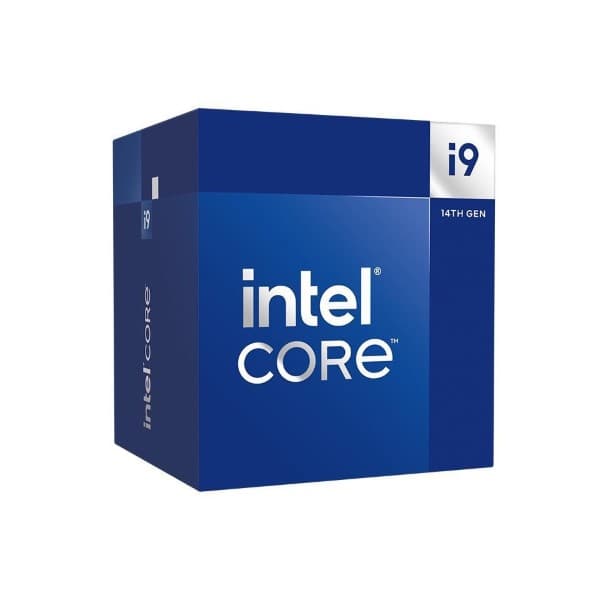

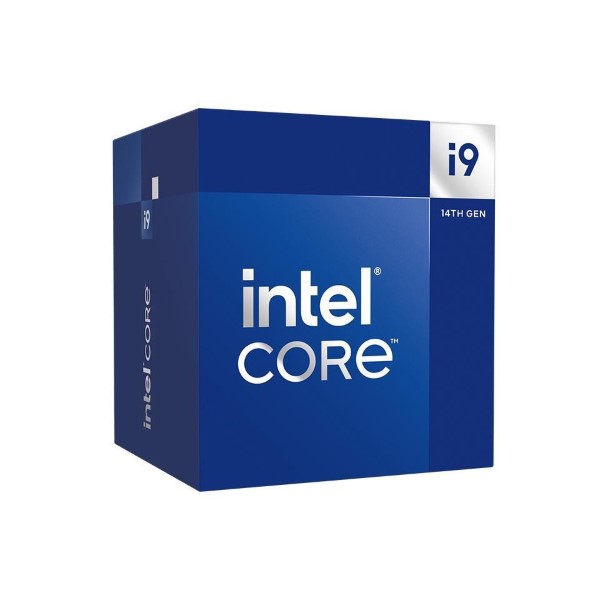
Performance-cores provide the speed to handle high-end games and demanding applications while low-priority and background tasks such as streaming video, playing music, and encoding media are handled by the processor's Efficient-cores.
The Intel Thread Director is built into the CPU's cores, working with the operating system to ensure each of the 32 threads are assigned to the right core at the right time.
This processor supports up to four PCIe 4.0 and sixteen PCIe 5.0 lanes, delivering 20 lanes in total for exceptional data throughput with compatible devices.
Intel Thermal Velocity Boost (TVB) is a technology that unlocks extra CPU performance by pushing the maximum frequency to 5.8 GHz when thermal headroom and turbo power budget are available. It is ideal for burst workloads that have sudden spikes in CPU utilization, providing a temporary performance boost to help avoid slowdowns.
Intel Adaptive Boost Technology opportunistically increases the all-core turbo frequency beyond previous Turbo Boost clock speeds, even when Thermal Velocity Boost conditions aren't met. Benefits can be seen with multi-threaded programs that scale with multiple cores, which includes many games. It can also help in multitasking situations, such as when gaming, streaming, and chatting all at once through different applications.
Gaussian and Neural Accelerator 3.0 (GNA) technology helps with noise suppression while enhancing background blurring during video chats.
Accelerates AI inference to improve performance for deep learning workloads.
Intel
24
Core i9-14900
Core i9
Normal
LGA 1700
32
N/A
BX8071514900
1 kg
N/A
| Feature | Value |
|---|---|
| Product Collection | Intel® Core™ i9 Processors (14th gen) |
| Code Name | Products formerly Raptor Lake |
| Vertical Segment | Desktop |
| Processor Number | i9-14900 |
| Lithography | Intel 7 |
| Use Conditions | PC/Client/Tablet, Workstation |
| Total Cores | 24 (8 performance + 16 efficient) |
| Total Threads | 32 |
| Max Turbo Frequency | 5.8 GHz (Intel® Thermal Velocity Boost) |
| Performance-Core Max Turbo Frequency | 5.4 GHz |
| Efficient-Core Max Turbo Frequency | 4.3 GHz |
| Performance-Core Base Frequency | 2.0 GHz |
| Efficient-Core Base Frequency | 1.5 GHz |
| Cache | 36 MB Intel® Smart Cache |
| Total L2 Cache | 32 MB |
| Processor Base Power | 65 W |
| Maximum Turbo Power | 219 W |
| Memory Specifications | Up to 192 GB |
| Memory Types | Up to DDR5 5600 MT/s, Up to DDR4 3200 MT/s |
| Max # of Memory Channels | 2 |
| Max Memory Bandwidth | 89.6 GB/s |
| ECC Memory Supported | Yes |
| GPU Name | Intel® UHD Graphics 770 |
| Graphics Base Frequency | 300 MHz |
| Graphics Max Dynamic Frequency | 1.65 GHz |
| Graphics Output | eDP 1.4b, DP 1.4a, HDMI 2.1 |
| Execution Units | 32 |
| Max Resolution (HDMI) | 4096 x 2160 @ 60Hz |
| Max Resolution (DP) | 7680 x 4320 @ 60Hz |
| Max Resolution (eDP - Integrated Flat Panel) | 5120 x 3200 @ 120Hz |
| DirectX* Support | 12 |
| OpenGL* Support | 4.5 |
| OpenCL* Support | 3.0 |
| Multi-Format Codec Engines | 2 |
| Intel® Quick Sync Video | Yes |
| Intel® Clear Video HD Technology | Yes |
| # of Displays Supported | 4 |
| Device ID | 0xA780 |
| Direct Media Interface (DMI) Revision | 4.0 |
| Max # of DMI Lanes | 8 |
| Scalability | 1S Only |
| PCI Express Revision | 5.0 and 4.0 |
| PCI Express Configurations | Up to 1x16+4, 2x8+4 |
| Max # of PCI Express Lanes | 20 |
| Sockets Supported | FCLGA1700 |
| Max CPU Configuration | 1 |
| Thermal Solution Specification | PCG 2020C |
| TJUNCTION | 100°C |
| Package Size | 45.0 mm x 37.5 mm |